
If you're comparing cannabis gummies for sleep, the product packaging and label is the most useful tool you have. It shows how much THC and CBD are in each serving, how much is in the whole package, and which other cannabinoids, like CBN, are present. Once you know where to look, comparing two packages can take under a minute.
This guide is here to help navigate a typical label, define key terms in plain language, and point out the warnings worth paying attention to.
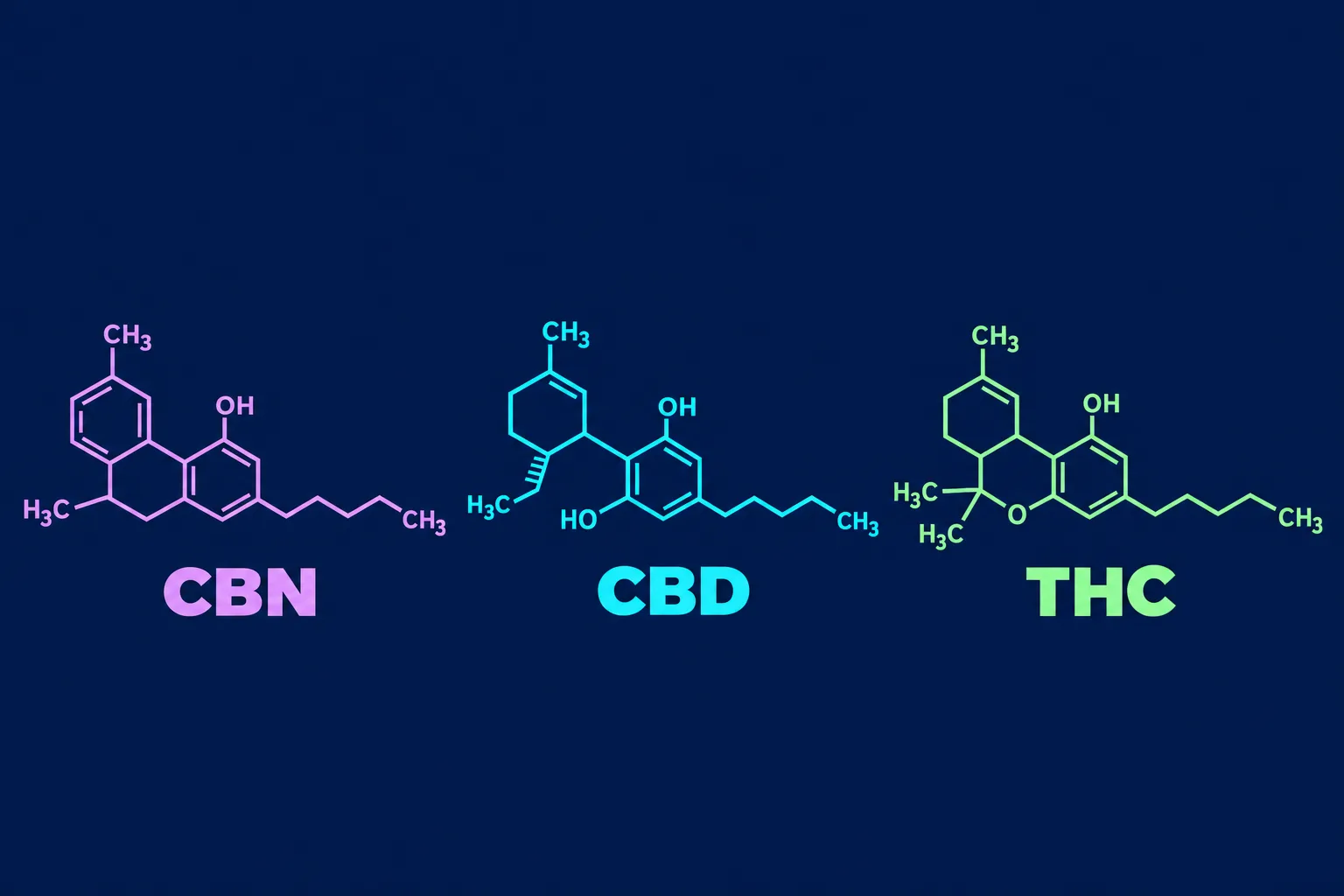
What THC, CBD, and CBN mean in cannabis sleep gummies
The cannabis plant produces a group of compounds called cannabinoids. Three of them show up most often on sleep gummy labels, and inside KANHA's FX Sleep gummy.
THC (delta-9-tetrahydrocannabinol) is the main compound behind the cannabis high, known for producing intoxicating effects. State rules on edibles focus closely on this cannabinoid.
CBD (cannabidiol) generally doesn't produce the high, or psychoactive effects linked to THC. Some gummies pair CBD with THC in a set ratio, for effects like pain relief and relaxation.
CBN (cannabinol) is a minor cannabinoid that has grown quickly in popularity as a sleep aid, and is referred to as the 'nighttime cannabinoid'. CBN is a great cannabinoid to look for when searching for a sleep gummy.
If you'd like more background on these, check out this explainer on CBN.
Where to find the numbers on cannabis gummies for sleep
Labels list cannabinoid content in milligrams (mg). California's regulations, for example, require edible labels to show both THC and CBD in milligrams per serving and per package. When a company prints a label after lab testing, the label must also list any other cannabinoid that makes up 5 percent or more of the total cannabinoid content.
In most states, those same rules cap adult-use edibles at 10 mg of THC per serving and 100 mg per package. Labels may show very small amounts as <2 mg per serving instead of an exact figure.
Nevada's rules measure edible servings at a maximum of 10 mg of THC each, and labels there note that the actual THC per serving may be within 15 percent of the stated amount. Massachusetts and Illinois set their own requirements, so layout and wording can differ from state to state, and product to product.
Per serving versus per package
This is an easy place to get tripped up. The per-serving number tells you what's in one serving, which is defined by the manufacturer. The per-package number is the total for everything inside. In most states, the maximum amount of THC per package is 100mg, which is most common in dispensaries.
Check the serving size on any cannabis gummies for sleep you're comparing, too. A serving may be one gummy or a portion of one, which will depend on the product.
Like most things, labels aren't perfect. The CDC notes that THC strength in edibles can be difficult to measure, and the amount on the label sometimes doesn't match exactly what's in the product. A certificate of analysis (COA) is a lab report for a specific batch, and gives you a second way to check the cannabinoid percentage. Ask your budtender whether one is available, or reach out directly to the company.
How to read ratios like 1:1, 2:1, or 3:2:1
Some packages list a ratio on the front. A ratio compares cannabinoids by weight. A 1:1 THC to CBD gummy has equal milligrams of each, while a 2:1 CBN to THC gummy would have twice as much CBN as THC.
Order matters, so look at which cannabinoid comes first. Then match the ratio against the milligram numbers on the back panel. If they don't line up the way you expect, ask a budtender before you buy!
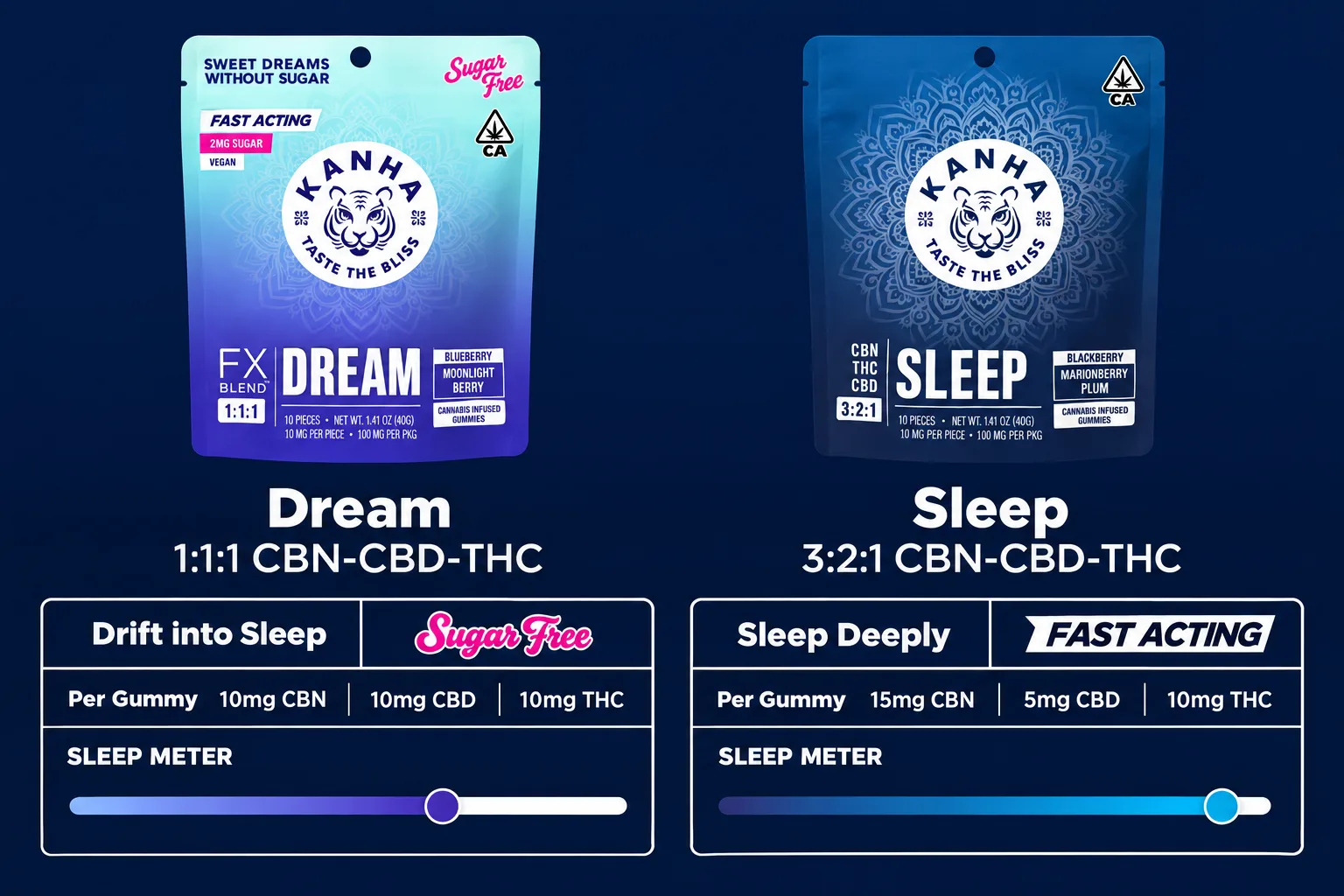
For example, in KANHA's FX Sleep, there is a 3:2:1 ratio, of CBN, THC, and CBD. This means that in each bag of gummies, there are 150mg of CBN, 100mg of THC, and 50mg of CBD. Other sleep products, like FX Dream, contain a 1:1:1 ratio of the three cannabinoids, for a more balanced effect. Check out our website, and take our sleep quiz to see which sleep gummy might be best for you.
Warnings to read before using cannabis sleep gummies
Feeling the effects of edibles happens slower than smoking or vaping. According to the CDC, most edibles can take 45 minutes to 2 hours to produce intoxicating effects, whereas with fast acting gummies, effects can be felt within 25 minutes.
Effects can also last a longer time compared to smoking for vaping cannabis. A medical review of cannabis edibles noted that effects can last more than 8 hours, whereas smoking and vaping typically lasts half of the time. With that in mind, before taking a cannabis gummy for sleep, be sure to plan around driving and other tasks that need a clear head.
It's always best to talk with a healthcare provider before trying any cannabis product if you take medication, have a diagnosed sleep condition such as sleep apnea, or are pregnant or breastfeeding.
Safe storage at home
California law requires cannabis products to come in tamper-evident, child-resistant packaging that is resealable when it holds more than one serving. Keep cannabis gummies for sleep in their original package, closed and out of reach of children and pets. For freshness, store your gummies in an airtight container in a cool, dark place away from heat and sunlight.
Where to buy, and questions for your budtender
You can buy KANHA's sleep edibles through state-licensed dispensaries or licensed delivery services in California, Nevada, Massachusetts, and Illinois. Selection varies by state and store, find a licensed retailer near you and check what's in stock locally.
When you're at the counter, asking these questions can help turn a label into a clear picture:
How many milligrams of THC, CBD, and CBN are in one serving?
Is one gummy a full serving, or does it break into smaller pieces?
Can I see the certificate of analysis for this batch?
Which terpenes or other ingredients does the label list?
While a budtender can help you interpret a package, they can't give medical advice. Be sure to reach out to your healthcare provider if you have questions about how cannabis gummies for sleep fit your health, and what dosage may be best for you.