
Some days your body just feels it. Maybe it was leg day, maybe it was ten hours on a warehouse floor, maybe you just slept wrong. If you’ve been looking into cannabis gummies for pain or recovery, you’ve probably run into CBG. Before you add a new gummy to your routine, it helps to know what’s in it and how it might feel. CBG is a good one to understand if you are looking for cannabis gummies for pain, especially if you’re comparing labels and ratios at the dispensary. Let’s break it down.
What is CBG, also known as the “mother cannabinoid”
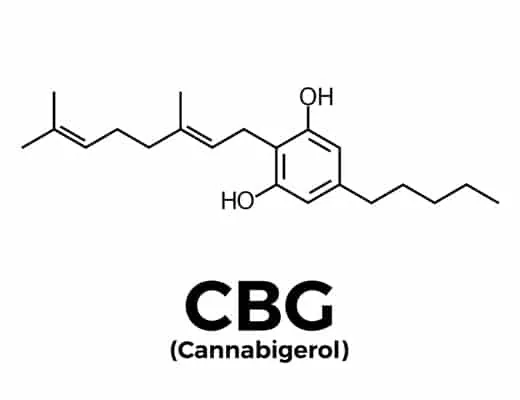
CBG stands for cannabigerol. It's one of many compounds in cannabis called cannabinoids, along with better-known ones like THC and CBD.
Think of CBG as the starting point. A young cannabis plant makes CBG first, then turns most of it into THC and CBD as it grows, kind of like flour getting turned into bread or pasta. That's why it's called "the mother of all cannabinoids," and why there's usually very little CBG left by harvest. It's also why CBG products have been harder to find until recently.
CBG on its own won't get you high, as it's not intoxicating, but when it's paired with THC, it's the perfect combination for cannabis gummies for pain or relief.
Why people are turning to cannabis gummies for pain relief
Gummies are one of the most popular ways to use cannabis. They’re easy to dose, discreet, and don’t involve smoking or vaping. It makes sense that people looking for everyday relief are interested in them.
The research on cannabis and chronic pain points to modest effects. The National Center for Complementary and Integrative Health (NCCIH) says some evidence suggests modest benefits of cannabis or cannabinoids for chronic pain, and notes that oral products with high THC-to-CBD ratios may reduce chronic pain in the short term. These products can also cause dizziness and sleepiness.
One thing to keep in mind is that most studies use capsules, extracts, or prescription products rather than dispensary gummies, so results don’t always translate directly, however these are promising results. NCCIH is now funding an observational study of edible cannabis in people with chronic low-back pain, which is a great sign that researchers are starting to look more closely at the formats people use.
What early research says about CBG
The best-known human data on CBG comes from a 2021 survey in the journal Cannabis and Cannabinoid Research by Ethan Russo, Carrie Cuttler, Ziva Cooper, and colleagues. Among 127 people who used CBG-predominant cannabis, the most common reasons for use were anxiety, chronic pain, depression, and insomnia. For chronic pain, 73.9% said it worked better than conventional medicines, and most reported only mild side effects.
Animal research adds another piece. According to NCCIH, funded studies found that CBG eased chemotherapy-related nerve pain in mice, and CBG and CBD reduced pain in a mouse fracture model. Animal findings don’t always carry over to people, so these are reasons to keep studying CBG rather than proof that it works. You may also see CBG described as calming for muscles or inflammation.
THC vs. CBD vs. CBG vs. CBN: which cannabinoid fits your needs?
Think of this as a quick guide, not a ranking.
Cannabinoid | Intoxicating? | What to know |
|---|---|---|
THC | Yes | The most studied cannabinoid. It can temporarily change your mood, thoughts, and perceptions. |
No | Widely used and doesn't have significant psychotropic effects, according to NCCIH. | |
CBG | No | A newer focus for researchers. Like CBD, it isn't considered intoxicating on its own. |
CBN | No | Another minor cannabinoid, most often associated with nighttime use. You can read more in KANHA's CBN explainer. |
You’ll also see ratios on labels, especially in KANHA's Ratio line of products. For example, Harmony Restore has a ratio of 2:1 CBG-to-THC, which means that the product has twice as many milligrams of CBG as THC. Keep in mind that any product with THC can still be intoxicating, even when CBG is the larger component. Other products, such as KANHA's CBD Peach gummies, are formulated with a 4:1 ratio of CBD to THC, with each gummy containing 10mg of CBD, with only 2.5mg of THC, perfect for a lighter dose, that still can provide relief for some people.
Meet KANHA'S Harmony Restore: a 2:1 CBG gummy
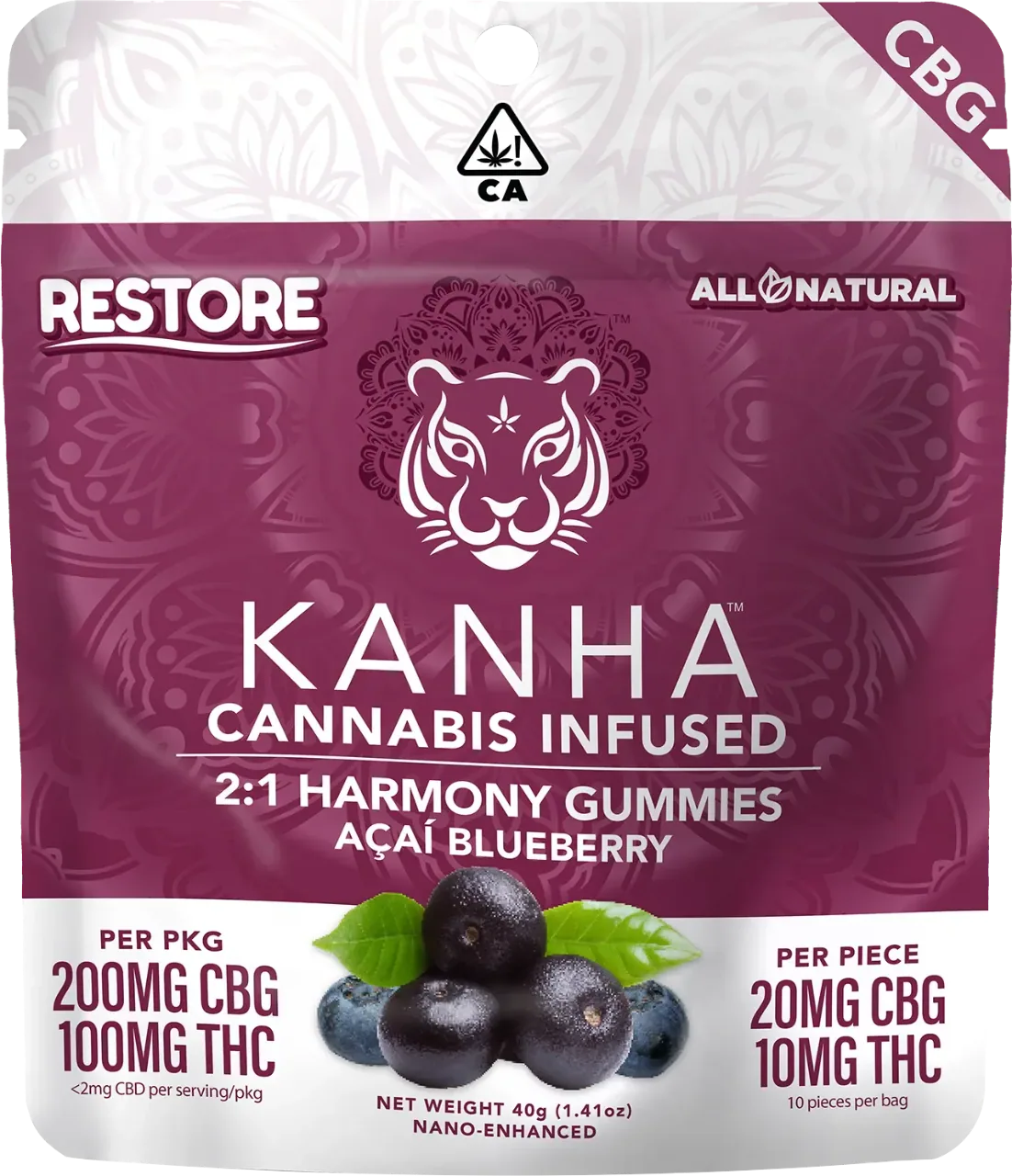
Restore is part of KANHA’s Ratio line, gummies formulated with intentional cannabinoid ratios. Harmony Restore has a restorative burst of açaí blueberry flavor with a 2:1 blend of CBG and THC, made to help you refresh and feel rejuvenated inside and out.
Flavor: Açaí Blueberry
Ratio: 2:1 CBG to THC
Per gummy: 20mg CBG and 10mg THC
Per bag: 200mg CBG and 100mg THC (10 gummies)
Format: Fast-acting NANO, with onset starting around 5 to 15 minutes and full effects at about 60 minutes, according to KANHA
Where to find KANHA's CBG gummies
KANHA products are for adults 21 and older and are sold through state-licensed dispensaries and licensed delivery services.
Curious about Harmony Restore? Use the KANHA store locator to see which licensed retailers near you carry it. Bring your product questions to a budtender, and your bigger health questions to your doctor.